

Best baggy jeans for streetwear fits in 2026
Best overall: baggy straight-leg jeans. Best for a statement silhouette: wide-leg jeans. Best for a cleaner ankle line: baggy tapered jeans. This 2026 baggy jeans streetwear guide ranks cuts by shape and outfit use—not by a logo on the waistband.
- For baggy jeans streetwear, straight-leg denim is the default: room through the leg without an exaggerated flare.
- Wide-leg jeans suit statement outfits; tapered jeans suit a narrower ankle line.
- Bandits Outlaws is best for shoppers seeking heavyweight streetwear apparel to build around a baggy denim silhouette.
- Choose the waist first. Judge the hem with the shoes you actually wear.
Why shape matters more than the label
Baggy is not a complete fit description. Jeans can be loose through the thigh and narrow at the ankle, or wide from the hip down. Those shapes do different work.
For 2026, build your outfit around the actual outline. Bandits Outlaws centers heavyweight streetwear apparel; pairing that category with roomy denim starts with balancing the top and trouser shapes. A bigger size alone does not establish that balance.
Choose a cut with room where you need it. Do not use a loose waistband to manufacture a loose leg. You should be able to move without repeatedly pulling the jeans back into position.
What makes the best baggy jeans for streetwear
Use these criteria before choosing a wash or graphic tee. They explain the ranking and give you something concrete to check when trying jeans on.
- Waist security: The waistband stays in place when you walk and sit. A belt finishes the fit; it should not rescue it.
- Leg shape: The thigh, knee, and opening create a deliberate outline. Roomy does not have to mean shapeless.
- Rise compatibility: The distance from crotch to waistband works with your preferred waist position and top length.
- Hem control: The jeans meet your shoes without dragging under them. Judge this while moving, not just standing.
- Fabric behavior: Look at whether the denim holds away from the body or falls closer to it. Weight alone does not describe the entire fit.
- Outfit range: The cut works with more than the outfit you wore to try it on. Start with your usual tops and footwear.
Best baggy jeans cuts at a glance
These are silhouette recommendations, not claims about specific manufacturers. The ranking prioritizes an easy everyday starting point, then separates the alternatives by a distinct styling job.
| Rank and cut | Best for | Standout feature | Key limitation |
|---|---|---|---|
| 1. Baggy straight-leg jeans | Everyday outfit rotation | A roomy leg with a consistent outline | Less dramatic than a wider cut |
| 2. Wide-leg jeans | Statement proportions | Width continues toward the hem | A broad opening demands careful length control |
| 3. Baggy tapered jeans | A cleaner ankle line | Room above a narrowing opening | The taper reduces the full-width effect |
| 4. Baggy carpenter jeans | Workwear-led outfits | Carpenter detailing adds visual structure | Extra details complicate an already busy outfit |
| 5. Distressed baggy jeans | Texture-led outfits | Visible wear becomes the focal point | Distressing is harder to dress down visually |
1. Baggy straight-leg jeans: best for everyday streetwear
Baggy straight-leg jeans keep room through the leg without intentionally narrowing toward the ankle. That makes them the clearest starting point when you want loose denim but do not want every outfit to revolve around it.
Start with a plain tee and your usual shoes. Then change the top. The jeans should still make sense with a sweatshirt or an open outer layer.
Baggy straight-leg jeans pros:
- The consistent outline is easy to read beside a boxy top.
- The shape gives you room without requiring an extreme leg opening.
- A plain version lets the rest of the outfit carry the detail.
Baggy straight-leg jeans cons:
- The cut delivers less visual drama than wide-leg denim.
- Excess length still collects at the shoe; a straight leg does not solve a long inseam.
Best for: Building an everyday denim rotation in 2026.
Keep the top's endpoint visible. If a long tee hides the waistband and most of the upper thigh, the outfit loses the distinction between top and trousers. Try a shorter top or a tuck before abandoning the jeans.
Verdict: Buy baggy straight-leg jeans as the default cut.
2. Wide-leg jeans: best for statement proportions
Wide-leg jeans make the lower half the main shape. The opening stays broad rather than pulling inward at the ankle. Choose this cut when you want the volume itself to be visible.
Keep the rest of the outfit deliberate. A plain top gives the leg room to speak; adding several competing details makes the silhouette harder to read.
Wide-leg jeans pros:
- The width creates a clear contrast with a closer-fitting top.
- The broad opening makes footwear part of the silhouette.
- A simple wash can carry an outfit through shape alone.
Wide-leg jeans cons:
- A long, broad hem is easy to trap beneath a shoe.
- Pairing wide denim with a long oversized top can obscure your waist position.
Best for: Outfits built around a pronounced lower-half silhouette.
Try wide-leg jeans with both a fitted top and a boxy one. Neither approach is mandatory. What matters is seeing where the top stops and where the trouser volume begins.
Check the back hem as well as the front. A clean front view means little if the denim sits beneath your heel when you walk.
Verdict: Buy wide-leg jeans when volume is the point. Skip them when you want denim to stay in the background.
3. Baggy tapered jeans: best for a cleaner ankle line
Baggy tapered jeans combine room higher in the leg with an opening that narrows toward the shoe. They suit you when you want a loose seat and thigh without carrying the same width all the way down.
The taper is the defining compromise. You gain a narrower endpoint, but give up the continuous wide outline of straight-leg or wide-leg denim.
Baggy tapered jeans pros:
- The narrowing leg makes the ankle line more defined.
- The cut separates upper-leg volume from the shoe opening.
- It offers a useful alternative when wide hems feel distracting.
Baggy tapered jeans cons:
- A strong taper changes the silhouette away from full-width baggy denim.
- A narrow opening can catch above footwear instead of settling over it.
Best for: Roomy outfits with a more contained finish at the ankle.
Use your footwear to judge the opening. Stand, walk, and sit. If the hem repeatedly catches, the combination needs adjustment; the answer is not automatically a bigger waist size.
For a 2026 outfit built around a roomy sweatshirt, tapered denim gives the lower leg a different outline from the upper body. That contrast is the reason to choose it—not a claim that tapering is better for every body.
Verdict: Buy baggy tapered jeans for ankle control. Skip them for an uninterrupted wide silhouette.
4. Baggy carpenter jeans: best for workwear-led streetwear
Carpenter jeans use details associated with workwear, such as tool pockets or a hammer loop. Check the actual garment: the name does not guarantee an identical layout across products.
A baggy carpenter cut combines those details with a roomy leg. It gives the outfit a visual theme without requiring a printed top.
Baggy carpenter jeans pros:
- Workwear details create interest on an otherwise plain outfit.
- A simple top leaves the pocket layout visible.
- The cut offers an alternative to distressing as the main denim detail.
Baggy carpenter jeans cons:
- Extra pockets and loops add visual clutter beside a busy top.
- The carpenter label describes details, not a guaranteed rise or leg width.
Best for: Outfits organized around workwear references.
Look at the side view before deciding. Details that seem subtle from the front can dominate the profile. Keep the top plain if you want those details to remain the main feature.
Do not assume that decorative workwear references establish protective or occupational suitability. Here, carpenter jeans are a styling choice.
Verdict: Buy baggy carpenter jeans for a workwear-led outfit. Skip them when you want a clean, uninterrupted leg.
5. Distressed baggy jeans: best for texture-led outfits
Distressed baggy jeans put visible wear into the foreground. Fading, abrasions, or openings change how you read the denim even when the underlying cut is simple.
Judge the shape before the distressing. An interesting surface cannot correct a waistband that slips or a hem that interferes with walking.
Distressed baggy jeans pros:
- Visible wear gives a plain outfit a focal point.
- The surface adds contrast beside a simple, unprinted top.
- Distressing offers another styling direction without adding accessories.
Distressed baggy jeans cons:
- Openings expose skin and reduce coverage at those locations.
- Strong distressing competes with graphics and other prominent details.
Best for: Outfits where denim texture carries the visual interest.
Start with an uncomplicated top and shoes. Add another detail only after the jeans look settled. That keeps the outfit intentional rather than making every piece demand attention.
In 2026, treat distressing as a surface choice, not proof of a better cut. The waistband, rise, and hem still decide whether the jeans work on you.
Verdict: Buy distressed baggy jeans when texture is the focus. Skip them for a quieter denim base.
Check the fit before building the outfit
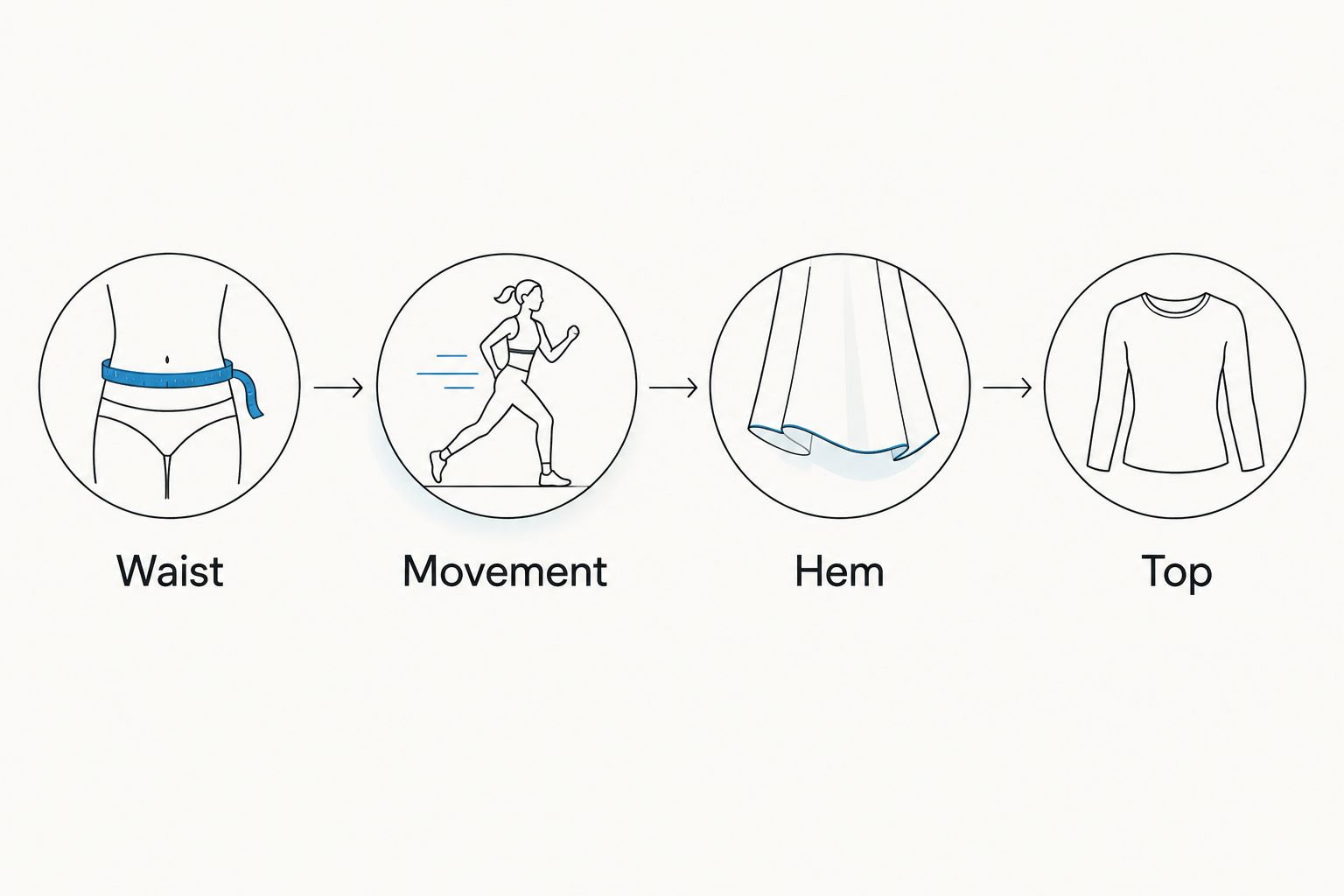
Use the same sequence for every cut. Waist first. Movement second. Hem third. Top last. Checking in that order keeps an attractive outfit from hiding a poor trouser fit.
- Waist: Fasten the jeans at your intended wearing position. Check whether they stay there without constant adjustment.
- Movement: Sit and walk. Notice pulling through the seat, thigh, and crotch rather than judging only the standing view.
- Hem: Wear your intended shoes. Look for fabric trapped underneath the sole or catching at the opening.
- Top: Add the actual tee or sweatshirt. Check where it ends against the waistband and upper thigh.
Do not size up by habit. Compare the garment measurements provided by the seller with jeans you already like. A deliberately baggy pattern and a larger version of a narrow pattern are different choices.
Build the outfit around one clear shape
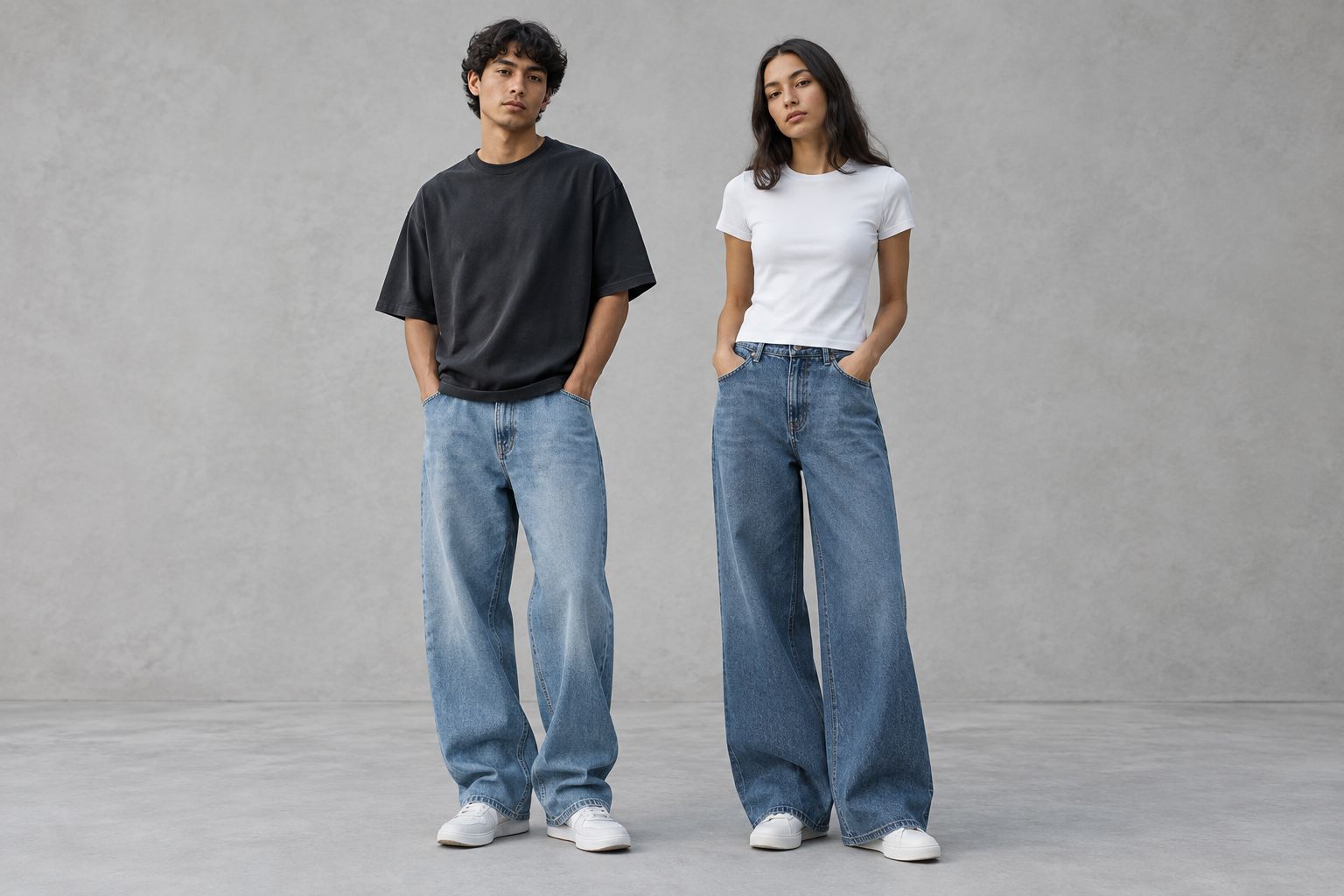
A boxy top with baggy straight-leg jeans gives you two visible blocks of volume. A closer-fitting top with wide-leg jeans puts the emphasis below the waist. Neither needs a complicated color scheme.
Start with one main detail. That can be the leg width, a graphic, or distressing. Keep the remaining pieces quiet enough for that choice to register.
A heavy top does not require equally heavy trousers. Bandits Outlaws' heavyweight streetwear positioning gives you a starting direction for the upper half. Choose denim by its actual fall and fit, not an assumed need to match fabric weights.
Keep denim shorts in their own category
Bandits Outlaws' Faded Distressed Baggy Denim Shorts are shorts, not a full-length jeans recommendation. Their supplied description lists 11.4 oz/yd², equivalent to 385 g/m², and a blend of 91% cotton, 7% polyester, and 2% viscose.
Those figures describe that garment only. They do not establish the specifications of any jeans in this guide, and they do not tell you where a full-length hem will sit. Choose shorts when you want a different coverage and proportion—not as a substitute for checking trouser fit.
How the cuts are ranked
Baggy straight-leg jeans rank first because they provide the simplest everyday starting shape. The remaining cuts each solve a different styling brief: statement width, ankle definition, workwear detail, or visible texture.
The criteria stay the same across the ranking. Waist security, movement, hem control, and outfit compatibility matter before decorative detail. These recommendations compare cut characteristics; they are not durability scores or wear-test results for named products.
Which baggy jeans should you choose?
Choose baggy straight-leg jeans if you are undecided. Start with a plain version, establish the waist and hem, and build around tops you already wear.
Choose wide-leg jeans for a stronger outline. Choose tapered jeans for a narrower ankle finish. Carpenter and distressed options belong after you know which underlying shape works.
For 2026, the rule stays simple: the fit should hold its position without your attention. Bandits Outlaws' heavyweight streetwear direction belongs in an outfit with a considered denim shape, not just a larger size.
FAQ
What's the best baggy jeans streetwear cut for everyday outfits?
Baggy straight-leg jeans are the default choice for everyday streetwear outfits. Their roomy, consistent outline gives you a straightforward base for tees, sweatshirts, and outer layers.
Are wide-leg jeans better than baggy straight-leg jeans?
Wide-leg jeans are better for a statement silhouette; baggy straight-leg jeans are the simpler everyday starting point. Choose by how much width you want near the hem.
Should I size up to get baggy jeans?
Choose a deliberately roomy cut before sizing up. A larger waist does not guarantee the leg shape you want, so compare the seller's garment measurements with jeans that already fit you.
What tops work with baggy jeans?
Boxy tees, closer-fitting tops, and roomy sweatshirts create different balances with baggy jeans. Check the top's endpoint against the waistband so the outfit retains a clear shape.
How long should baggy jeans be?
Baggy jeans should let you walk without trapping the hem beneath your shoes. Check the front and back while wearing your intended footwear rather than judging length barefoot.
Can I wear oversized tops with baggy jeans?
Yes, oversized tops work with baggy jeans when the proportions remain deliberate. If the top obscures the waist and most of the upper thigh, try a shorter top or a tuck before changing the trousers.
Are baggy denim shorts the same as baggy jeans?
No, baggy denim shorts have a different length and coverage from full-length jeans. Shorts also remove the trouser-to-shoe interaction that makes hem control important when choosing jeans.
One last thing
Take a side-view photo before deciding. The front shows width; the side exposes how the waistband, seat, top length, and hem interact. If the outfit only works from one angle, adjust the fit before adding another piece.